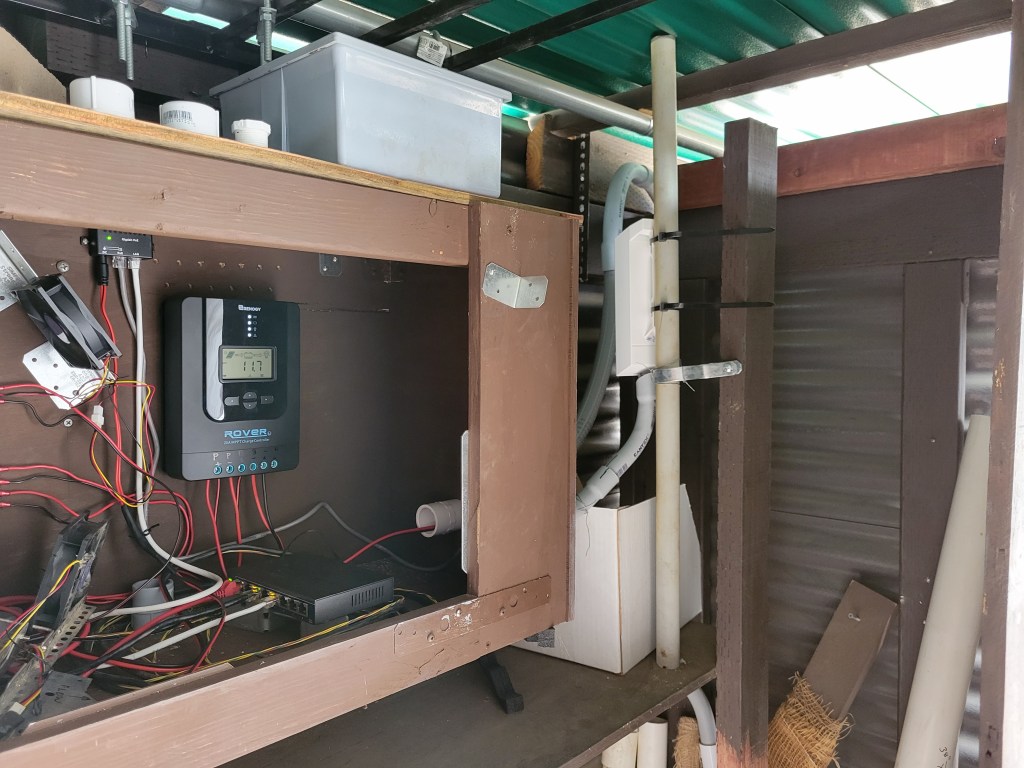
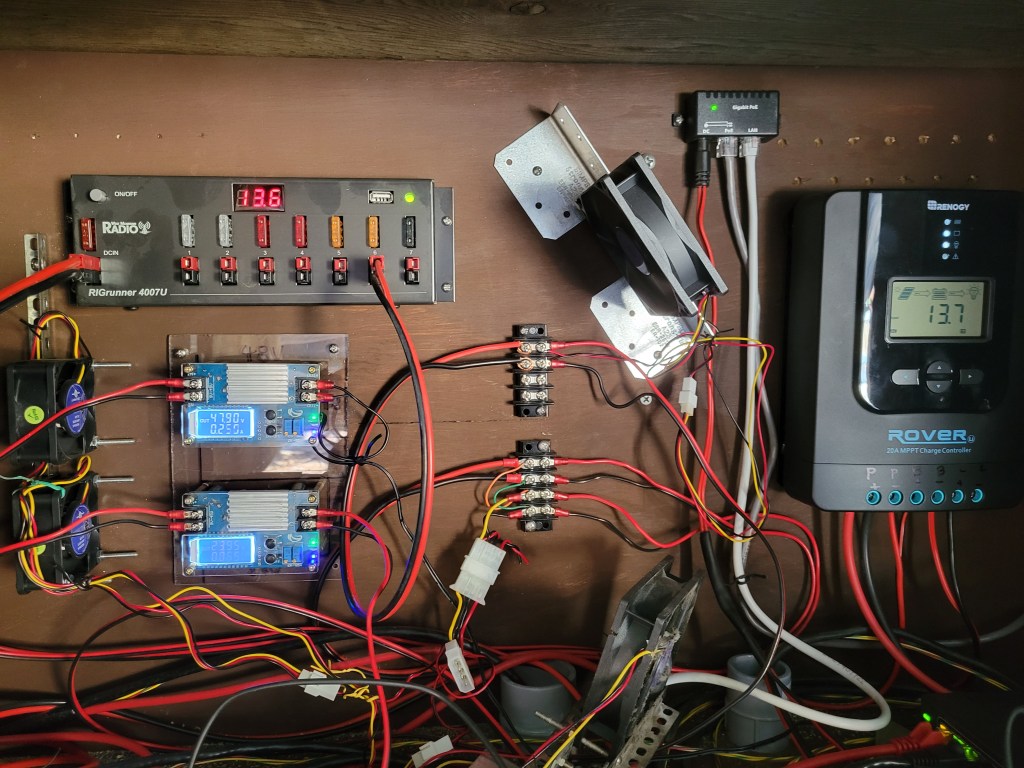
- A battery powered (100 Ahr Mighty Max AGM), solar panel charged power system with 12V to 24V and 12V to 48V buck boost converters (WHDTS 5A DC-DC 10-V-50V Adjustable, with LCD) is used for powering a 5.8 GHz TP-Link CPE510 AREDN capable mesh node transceiver and two cameras (later updated to four cameras). A Renogy Rover MPPT solar charge controller is used with two Renogy 100W panels in series (matching Renogy aluminum mounting brackets are used).
- Battery update Dec 2022: The 100 Ahr Mighty Max AGM batter is not lasting until morning light with all four cameras running (at approx. 2.5A load current). Even with the two outside cameras off with the longer nights the Renogy controller reaches low voltage shutdown (at 11.1 V) with approx 1.5 A load current, for about 20 Ahr total indicated by the Renogy dispaly. Replaced the AGM with a new Mighty Max 100 Ahr Litthium Iron Phosphate battery. Now even with all four cameras on with a load current of 2.25 A (lower current since the voltage is how higher at 13.2V nominal) and a 30 Ahr total draw the power stays on at 12.9V and approximately 30% charge still left.
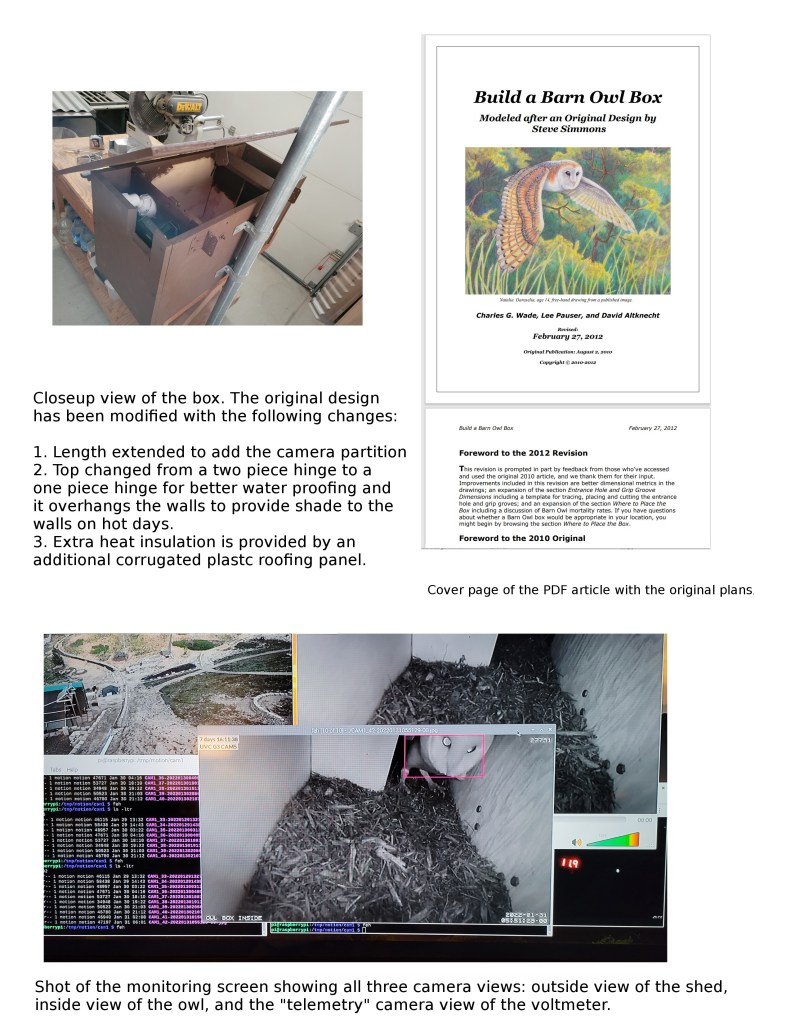
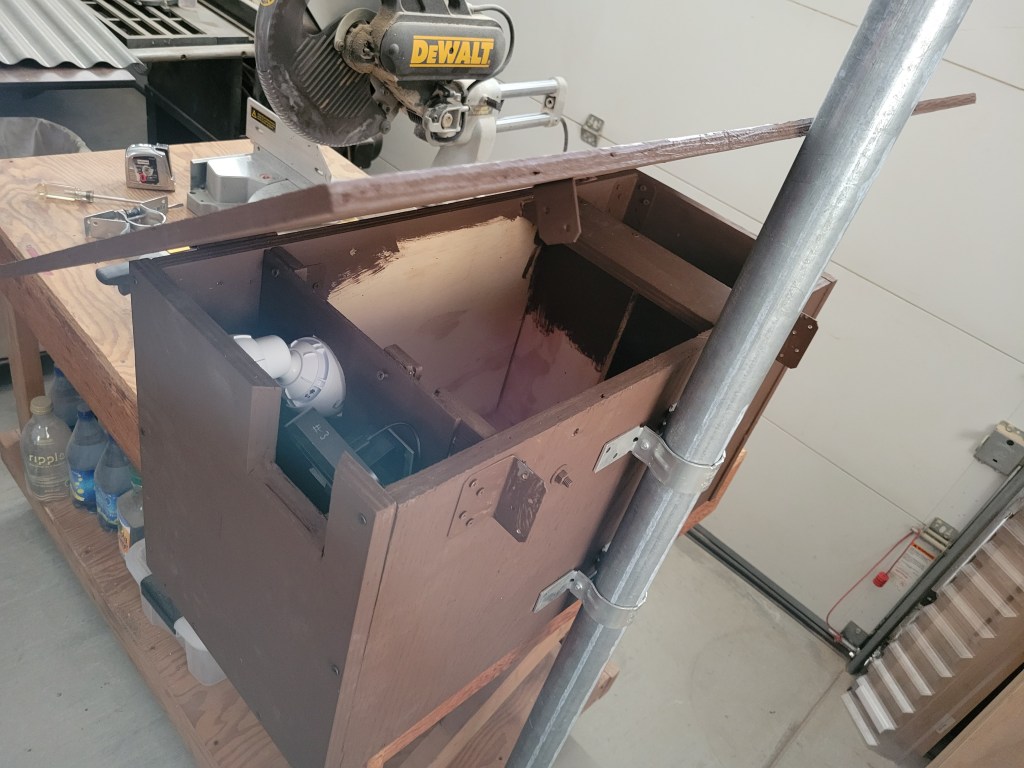
- Raspberry Pi camera processor using the Linux “Motion” program is used to detect motion from both the inward facing owl box Ubiquity UVC-G3 night vision IP camera and the outward facing Logitech 4K Pro low light capable web cam mounted behind a tinted window to look out at the yard. The Logitech camera is connected to a separate Raspberry Pi V3 mounted at the bottom of the pole with a 15ft long USB cable. A third camera, a USB web cam connected to another Raspberry Pi (also POE powered) inside the power cabinet has the camera pointed at the voltmeter to monitor the battery voltage (poor mans telemetry channel HI HI). A fourth camera has been added on the shed roof by the solar panels to look back at the outside of the owl box to see activity on the roof and below the box (acting as a “wild life cam”); this is another Ubiquity UVC night vision camera.
- The battery, power supplies, solar panels, POE injectors, 4 port POE ethernet switch, and TP-link CPE510 mesh node (that transmits the video to the house) are located in a shed down in the back yard canyon about 300 ft away from the house which is up on the top of the hill. Aproximately 100 feet of CAT6 cable is used to route the POE (Power Over Ethernet data/power on one cable) over to the owl box (one cable for each camera). One POE cable connects directly to the Ubiquity camera and the other cable connects to the Pi card at the bottom of the pole via a POE to USB power splitter.
- Up in the house another TP-Link CPE510 5.8Ghz node is used to receive the live streaming video and process it on a Raspberry Pi400 as the monitoring station. Motion detection processing is done on the Pi400 so both still shots and short video clips are saved whenever motion is detected in the owl box. Also, the VLC viewer program is used to monitor the RTSP live streaming protocol from the inside facing camera so live sound can be heard (yes the owls make alot of noise!). The motion detection program does not currently capture any sound.
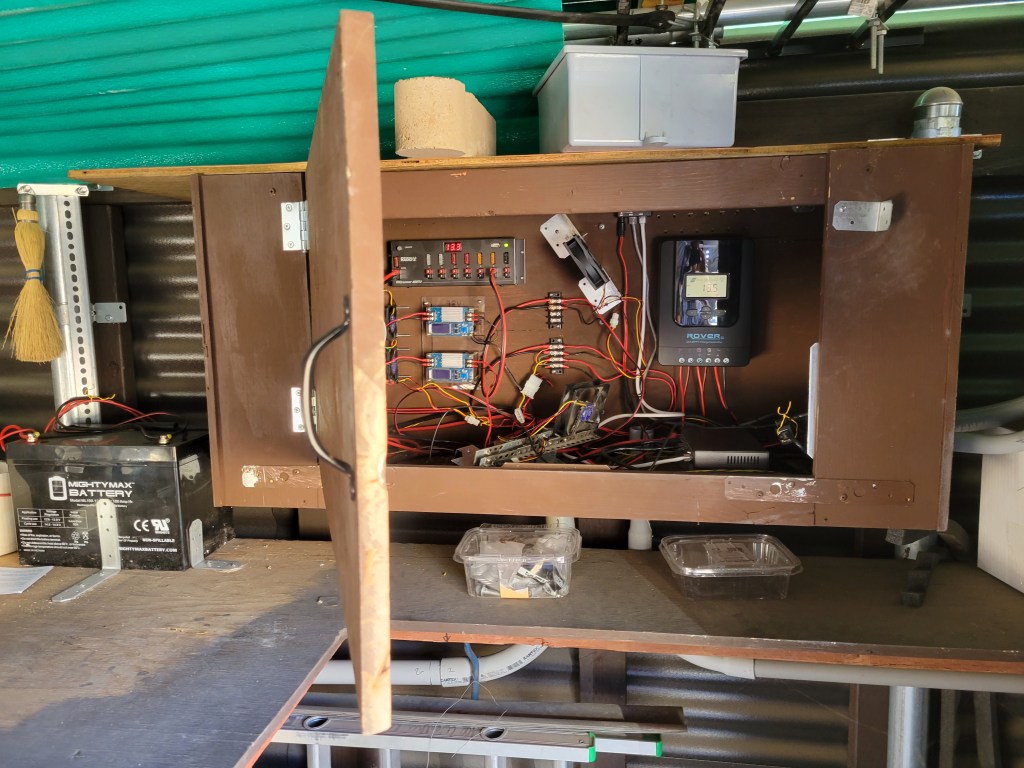
- The equipment in the shed is protected from “critters” in a cabinet with ventilation holes and multiple muffin fans to keep things cool during summer heat waves. The coils on the buck boost power converters get very warm so there is a fan aimed at each converter, a fan aimed at the solar charge controller, and a fan aimed at the POE eithernet switch.
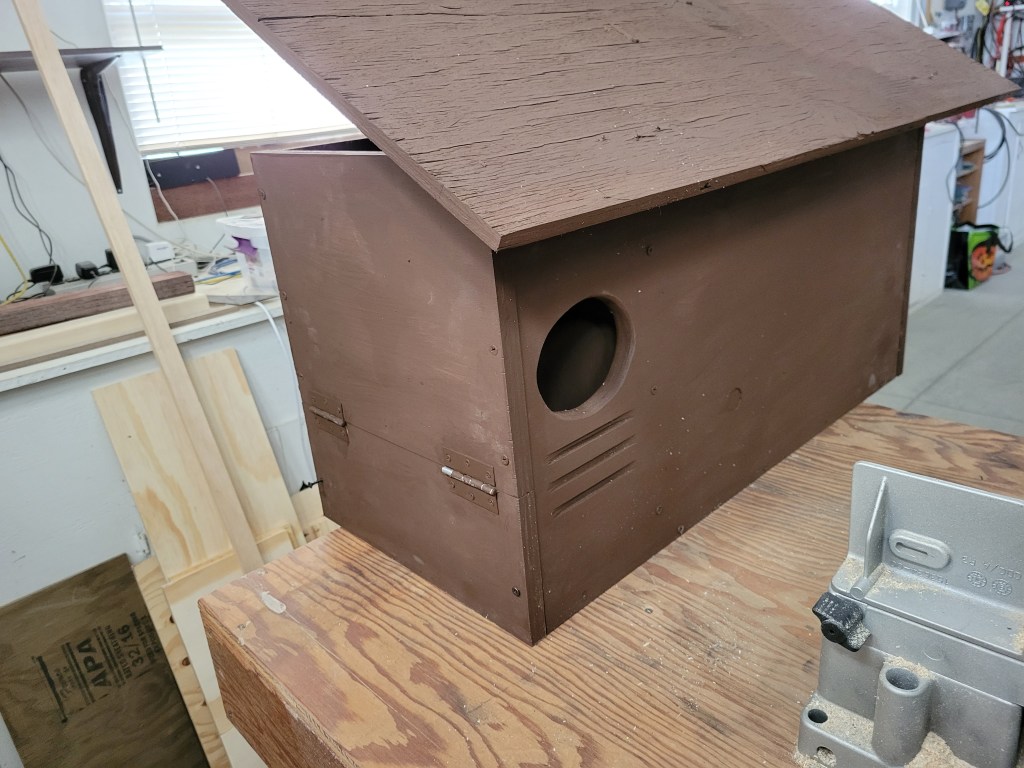
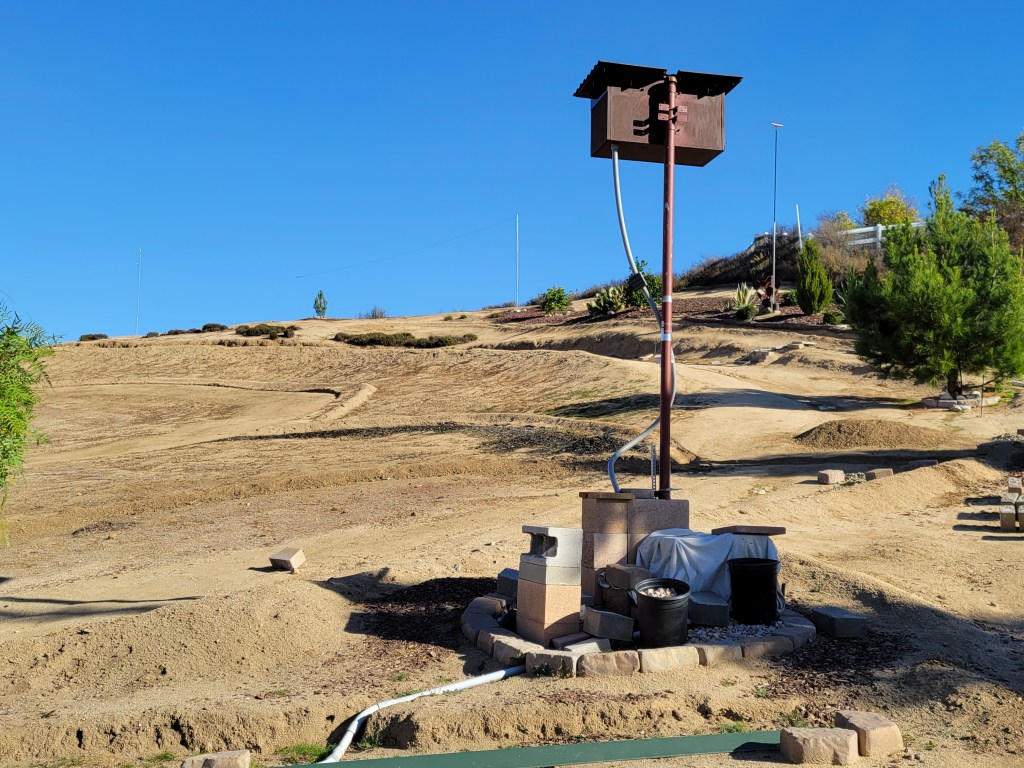
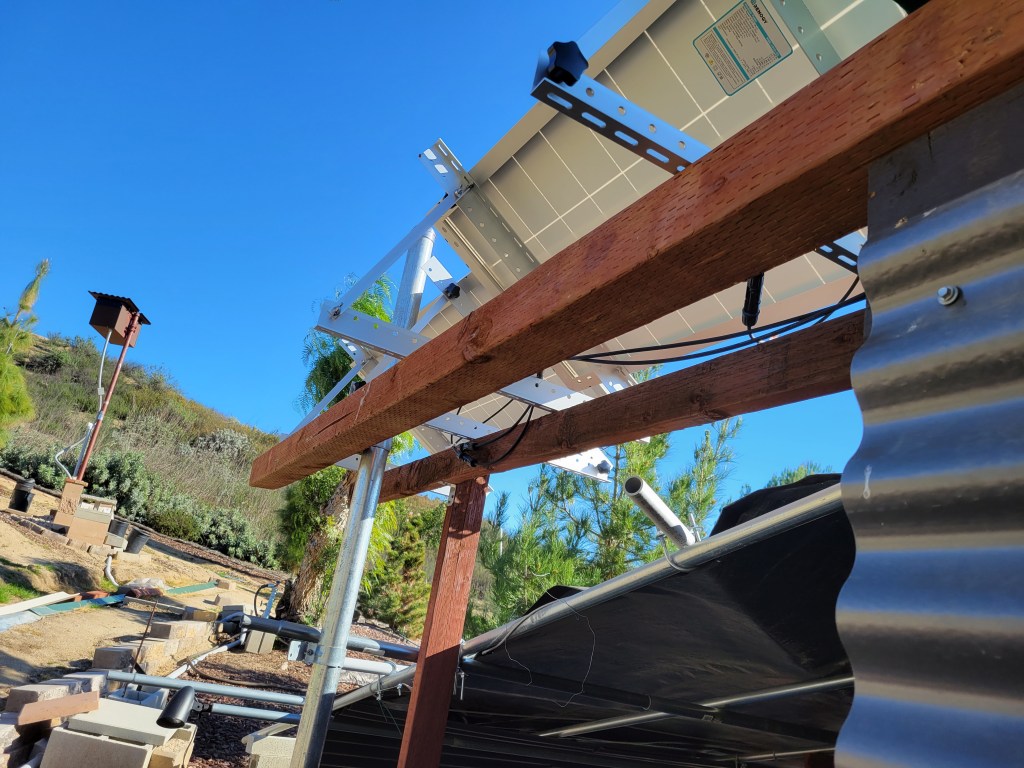
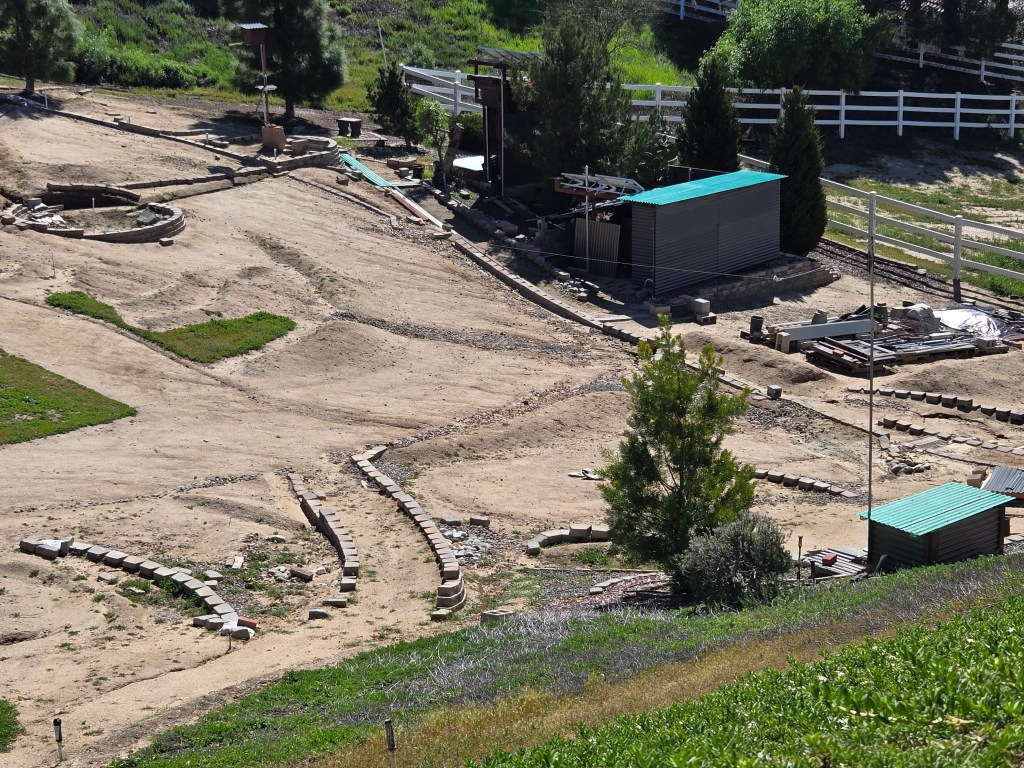
- Pictures below show some of the details. The BIG view picture shows the owl box in relation to the half built (2 walls and a green roof) power cabinet shed. About 100ft of 1″ flexible conduit route the ethernet cables to the shed. In between the owl box and the shed is a newer half build shed with four more solar panels. Two of those panels are now in series with the first two for a total of four panels in series (80V nominal) so the battery now stays charged in low light conditions. Also visible is the half built water feature pond (13ft dia.) which may help bring in more wild life. Those two extra panels will be used to power the water pump in the future.
 The Wine Country Owl Box